Via Crucis (the path of cancer treatment)
The HummingbirdVia Crucis (the path of cancer treatment) is the novel’s name for the drawn-out sequence of diagnosis, treatment, waiting, and decline that follows cancer. It first describes Probus Carrera’s treatment after an adenocarcinoma diagnosis, then returns with greater urgency when Letizia is found to have advanced uterine cancer. For Marco Carrera, the sequence is not merely a medical itinerary: accompanying his parents through it makes care a daily obligation and ultimately brings him to a decision about his father’s final days.
The Treatment Path
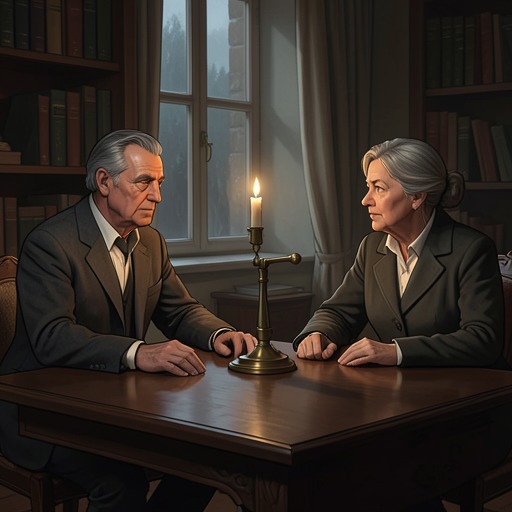
Probus had spoken of leaving Florence for London, where his attachment to Marylebone had endured since a study visit decades earlier. Three weeks after that intention was reported to his family, a biopsy following a colonoscopy and the discovery of occult blood established the diagnosis of adenocarcinoma. His plan to move ended with the diagnosis: London and Marylebone were no longer immediate possibilities.
The novel describes the treatment path as a sequence rather than a single decisive intervention. It proceeds from discovery of the illness to biopsy and its result, consultations with specialists, and uncertainty over surgery or treatment. A procedure or an initial course may bring encouragement, only for further treatment, side effects, or a changed protocol to follow; even a choice of treatment may later give way to surgery. The list’s repeated turns make the illness legible as an extended process while emphasizing that its endpoint cannot be reached at once.
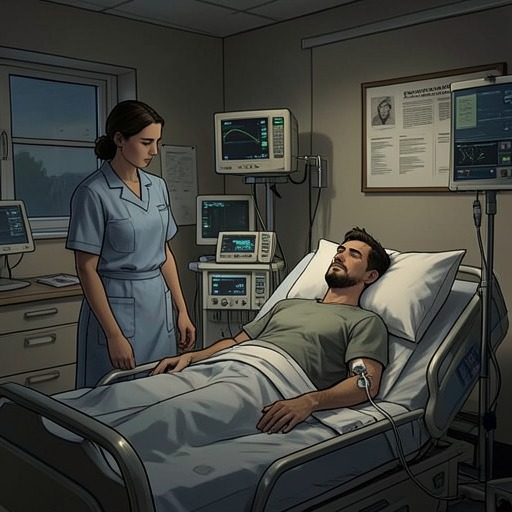
In Probus’s case, surgery on the intestine was followed by metastases in the liver and a lung. The chosen regimen brought intense chemotherapy in winter, a break in spring, rest through summer, and a return to the protocol in autumn. The oncologist said that if Probus’s body and morale held up, he might live for many years with an appreciable quality of life. That possibility depended on endurance, not cure: the metastases diminished with the first chemotherapy visits, but the treatment and its demands continued.
Care as Daily Labor
Marco assumed responsibility for assisting Probus from the beginning. He accompanied him to chemotherapy, monitored side effects and other medications, took him for scans, and arranged for a nurse to visit the home for blood samples. He also had to work and care for Adele Carrera. He regarded his own effort as small beside the illness borne by his father, but the novel makes its accumulated tasks concrete: treatment required repeated transport, supervision, and attention between hospital visits.
Probus’s physical condition initially held up reasonably well, while his feelings were difficult to read because he spoke so little. Letizia, by contrast, was shocked by his illness and struggled to care for him as she believed she ought. Her distress grew serious enough that Marco wondered whether her longtime psychoanalyst could still help her. Adele offered a different kind of assistance by bringing Letizia a sudoku puzzle she and her friends had encountered in England. Letizia became absorbed in it; the small activity offered a practical point of engagement within the wider uncertainty of illness.
The family’s reunions sharpened rather than relieved the strain. When Giacomo came from North Carolina with his wife, Violet, and their daughters for two weeks, the house was full again. The appearance of a united family felt painful to Marco: illness, rather than ordinary closeness, had brought them together, while Probus’s reticence meant that the family did not speak openly about what was happening. Luisa’s absence that summer added another private pressure. Because she had not come for the whole season, Marco took it as proof that he had lost her, although the narrative later says he was mistaken.
Letizia’s Second Path
In October, Probus resumed chemotherapy. A few weeks later, the family’s attention was redirected by Letizia’s own illness. She had already begun to have fevers and lose weight during the summer, but her general practitioner had not treated those signs as alarming. In November, a gynecological check-up revealed an advanced tumor in the body of the uterus. A family friend who was a gynecologist called Marco before informing Letizia, and Marco went to tell his mother himself before taking her home.
Letizia repeatedly said that she was dying. The same oncologist who had given Probus reason for hope the previous year offered her none from the first consultation. Marco experienced the bluntness as almost obscene, but Letizia was not surprised: her own repeated declaration had made clear how long she had already felt the force of the diagnosis. Although the oncologist considered chemotherapy useless, she underwent a course of it, unlike the younger Letizia, whose pride had once been directed against what she considered superfluous.
Just before Christmas, Marco accompanied both parents to chemotherapy on the same day, one in each room. The juxtaposition turns the treatment path into a family circumstance that no abstract account of procedures can contain: the son moves between two parents undergoing treatment, while neither illness can be set aside for the other. The scene also brings back to him a book of stories he had read years earlier with Marina, when they were in love and Adele was about to be born. He remembered little about the book itself, but the memory returned with unexpected sweetness in the middle of the hospital routine.
The Final Station
After Letizia’s death, Probus was nearly consumed by the illness but remained fiercely attached to life. Pain-management measures and morphine left him unsettled by day and night. In the morphine-distorted language the narrative reports, he repeatedly demanded that Marco take him away, invoking a promise Marco had not made beyond his commitment not to let him die in hospital. The doctor assigned by the local health service to manage Probus’s pain did not say how long the process would take. Marco, himself a doctor, believed he could bring it to an end sooner.
The text presents Marco’s decision as the last station of the treatment path, marked by a persistent doubt about whether such an act belongs to a rare group of people or to the most unfortunate. After another plea from his father, Marco gave him morphine sulfate outside the protocol followed by the pain doctor. He lay down beside him and asked whether he was ready to move to Marylebone. Probus, now docile, assented and added names Marco did not understand. His last words that Marco could distinguish were “Goldfinger house.” Marco then acted through his father’s venous access using the morphine available to him.
The timing ties this ending to the family’s preceding losses: Probus died the day after the one-month mark of Letizia’s death, and that day was also his birthday. Marco told visitors at the funeral home that he was tired. The novel’s treatment-path metaphor thus reaches beyond the medical sequence itself. Its successive stations encompass the uncertainty of treatment, the work of caregiving, two overlapping parental illnesses, and a final choice that Marco makes in response to his father’s suffering and repeated requests.